
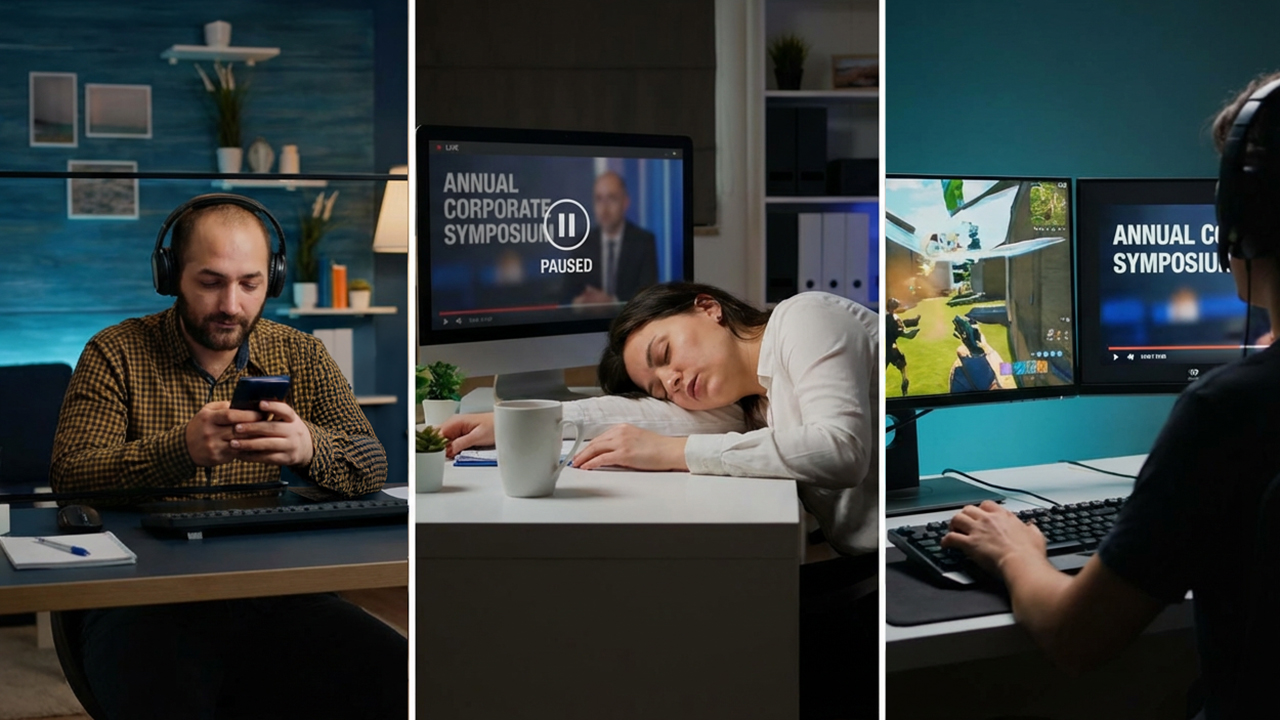
Smart planning and a dash of creativity can turn your webcast from “meh” to memorable. Corporate webcasts often get surprisingly low online audience numbers, even when the content is important. Here are the real reasons for low online attendance, gathered by Event Streaming .TV a webcast production company of 20 years:
1. Weak Promotion (Biggest Issue)
Many companies assume “If we build it, they will come.” Unlike consumer events, corporate webcasts, webinars and town hall meetings rarely get:
– Proper email nurture campaigns
– Multi-touch reminders
– Internal leadership endorsement
– Calendar holds
– Re-targeting ads
– Social amplification
A single email invite = low online audience. Strong campaigns = 2–5x attendance.
2. No Clear Audience Value
Corporate teams often promote: “Q3 Results Webcast” instead of: “How We’re Protecting Jobs – Live Q&A” If value isn’t obvious in 5 seconds, registration drops. Viewers care about:
– What’s in it for me?
– Will I learn something?
– Can I ask questions?
– Is this relevant to my role?
If value isn’t obvious in 5 seconds, registration drops.
3. It Feels Mandatory or Corporate
Compare a typical corporate town hall to a keynote at TED, production energy and storytelling matter. Many internal webcasts:
– Are overly scripted
– Lack energy
– Feature slide-heavy talking heads
– Feel like compliance, not insight
4. Timing Problems
For international companies, one time rarely suits all regions. Corporate webcasts are often scheduled:
– Midday when people are busy
– During school holidays
– During major industry events
– At awkward global time zones
5. Overestimated Audience Size
A common assumption: “We have 5,000 employees, so we’ll get 300 viewers.” The reality is that can quickly shrink because:
– Only 30–40% open the invite
– Of those, 20–30% register
– Of those, 40–60% actually attend
6. No On-Demand Strategy
Companies often measure only the “live online audience” and ignore total reach. Live attendance may be low, but:
– On-demand views often exceed live 5-10x
– Trimmed clips perform well on LinkedIn
– Chapters increase completion rates
7. Platform Friction
Compare frictionless joins on platforms like Zoom Video Communications vs. legacy enterprise systems. Drop-off spikes, if joining requires:
– Account creation
– Password setup
– VPN access
– Plugin downloads
8. Lack of Internal Champions
When senior leaders actively promote attendance, numbers rise significantly. If the CEO personally references the event in a meeting, attendance can double.
9. No Interaction = No Commitment
Passive viewing leads to low engagement and lower return attendance. Webcasts that consistently outperform “broadcast-only” will always include:
– Polls and voting (Slido is great)
– Live Q&A (anonymous and named submissions)
– Chat
– Gamification
10. Poor Content Positioning
Sometimes the webcast topic simply isn’t strategically aligned with what the audience cares about right now. (Context matters)
– A finance update during layoffs?
– An innovation keynote during a hiring freeze?
The Real Truth
Most corporate webcasts don’t fail because of production quality. They fail because:
– They’re treated as an event
– Instead of a campaign
– Or worse, as an obligation
Low webcast attendance is typically a strategy issue, not a streaming failure. Clear audience value, strong promotion, leadership support, smart scheduling, and interactive formats all drive better results. When companies approach webcasts as planned communication campaigns rather than routine broadcasts, viewer numbers and engagement increase boom.
For more information on event webcast production and our conference filming options , visit Event Streaming .TV or email our events team directly hello@eventstreaming.tv or call 01223 505600
#events #avhire #avservices #eventfilming #animation #webcast #eventproduction #livestreaming #townhallevents